 Accessories
Cut-and-Sew Manufacturing for Custom Apparel Collections
HUYU Apparel turns patterns, Tech Packs and reference samples into production-ready cut-and-sew garments across T-shirts, shirts, hoodies, jackets, trousers, skirts, dresses, uniforms and more. We support pattern review, fabric sourcing, cutting, sewing, finishing, sampling, quality control and export shipment for brands, startups and wholesalers.
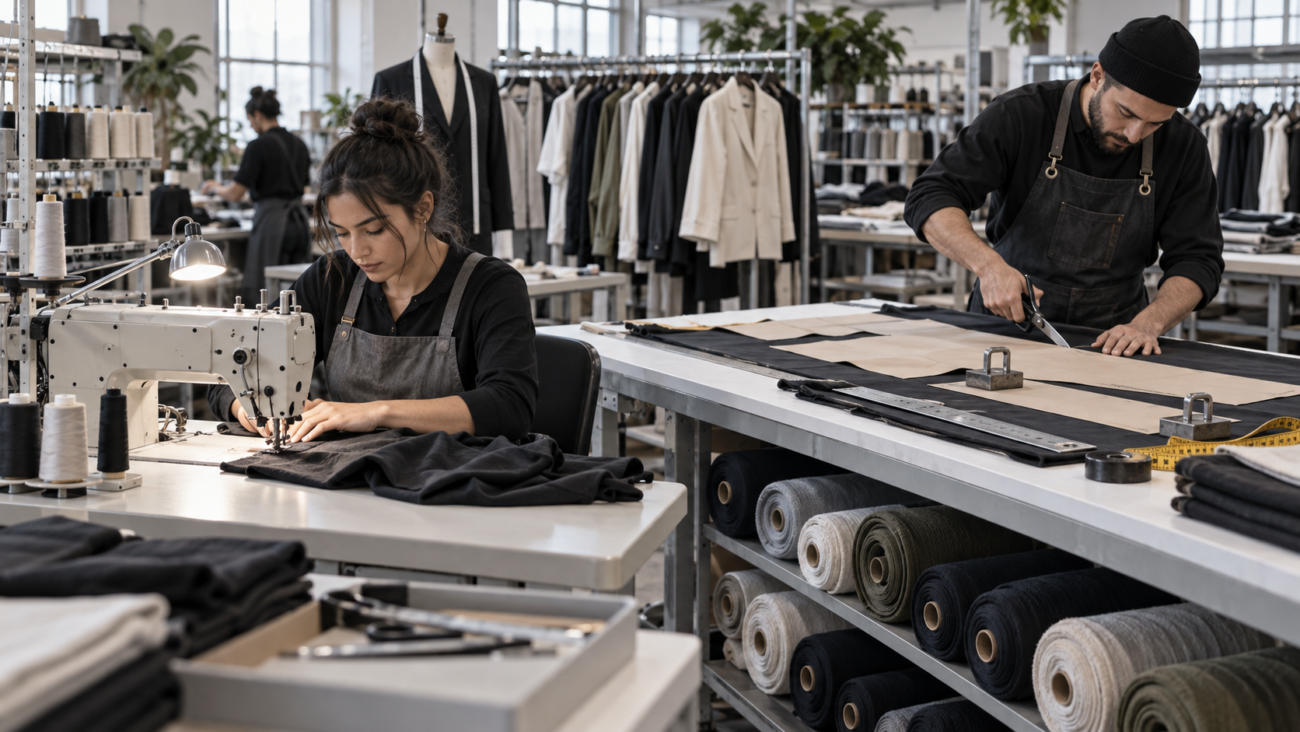
HUYU Apparel turns your pattern, Tech Pack or reference sample into production-ready apparel. We coordinate fabric sourcing, pattern review, cutting, sewing, finishing, labels, packaging, quality control and export shipment across knit and woven garments for brands, startups and wholesalers.
|
PRODUCTION ITEM |
HUYU APPAREL SUPPORT |
|---|---|
|
Products |
T-shirts, shirts, polos, hoodies, jackets, trousers, skirts, dresses, uniforms and coordinated capsule styles |
|
Materials |
Jersey, fleece, rib, interlock and woven fabrics in cotton, recycled fibers and blended compositions |
|
Gauge Range |
Fabric weights and constructions selected by category, season, fit and target price |
|
Services |
Pattern review, sampling, OEM, ODM, private label, cut-and-sew production, labels, packaging, QC and shipment |
|
MOQ |
Flexible by category, fabric, color count and construction; confirmed after collection review |
|
Sample Time |
Usually 7-10 days after the product brief and materials are confirmed |
|
Bulk Production |
Bulk timing confirmed by fabric availability, quantity, decoration, packaging and delivery schedule |
Cut-and-Sew Garments We Produce
We produce knit and woven apparel for different markets and price points, including T-shirts, polos, shirts, hoodies, sweatshirts, jackets, trousers, skirts, dresses, uniforms and coordinated capsules. Each style is developed around your approved pattern, fabric, fit and finishing requirements.
- T-shirts and polos: jersey weights, fit options and decoration placement for everyday collections.
Shirts and overshirts: woven or knit styles with clear collar, cuff, placket and trim specifications.
Hoodies and sweatshirts: fleece or jersey programs with custom hoods, pockets, rib finishes, prints or embroidery.
Jackets and outerwear: lightweight layers, workwear and structured pieces built to the target season.
Trousers, shorts, skirts and dresses: coordinated bottoms and one-piece styles developed to your measurements.
Uniforms and capsule collections: consistent patterns, colors, labels and packaging across multiple styles.
Reference samples and product photos are starting points, not fixed stock. We adapt the silhouette, fabric, fit, color, construction, decoration, labels and packaging to your target customer and selling channel.
Construction Decisions to Confirm Before Sampling
Before sampling, confirm the pattern, measurements, seam construction, fabric behavior, closures, pockets, trims, decoration, labels and packaging. Good decisions at this stage reduce rework and protect fit, appearance and production efficiency.
|
Design Decision |
What Must Be Confirmed |
Typical Production Risk |
|---|---|---|
|
Front placket |
Width, stitch structure, density, attachment method and finished |
Waving, twisting, stretching or uneven front lengths |
|
Buttons and |
Button diameter, thickness, weight, spacing and buttonhole |
Buttonholes opening too wide, pulling or |
|
Zipper |
Zipper type, tape, length, shrinkage behavior and insertion |
Rippling, exposed tape or a front edge that does not |
|
Neckline or collar |
V depth, collar height, rib recovery and neckline shape |
Neckline spreading, collar collapse or asymmetric |
|
Pockets |
Position, opening width, reinforcement and weight |
Sagging, distortion or visible pulling on the body |
|
Hem and cuffs |
Rib tension, width, elastane use and finished recovery |
Flare, tightness or loss of shape after washing |
A clear pattern, sketch or Tech Pack is enough to begin. We help convert the idea into measurable specifications for fabric, fit, construction, branding and production.
Fabric, Fit and Construction Options
We compare jersey, fleece, rib, interlock and woven fabrics according to season, silhouette, stretch, recovery, hand feel, durability and target price. The pattern and sewing method are reviewed together with fabric weight and finishing.
- Jersey and fleece options: select breathable, midweight or warm constructions according to season, fit and target price.
Lightweight woven fabrics: suitable for shirts, dresses, skirts and easy layering pieces.
Structured woven fabrics: useful for jackets, trousers, uniforms and workwear where shape retention matters.
Stretch and recovery options: evaluate comfort, movement and dimensional stability before bulk cutting and sewing.
Material selection should reflect season, care expectations and target price. We compare composition, weight, stretch, recovery, shrinkage, colorfastness, pilling, hand feel and finishing before cutting and sewing.
Our Cut-and-Sew Production Process
1. Review the pattern, Tech Pack or reference sample. 2. Confirm fabric, trims, measurements and construction. 3. Develop and fit the first sample. 4. Approve revisions, branding and packaging. 5. Coordinate cutting, sewing, finishing, inspection and export shipment.
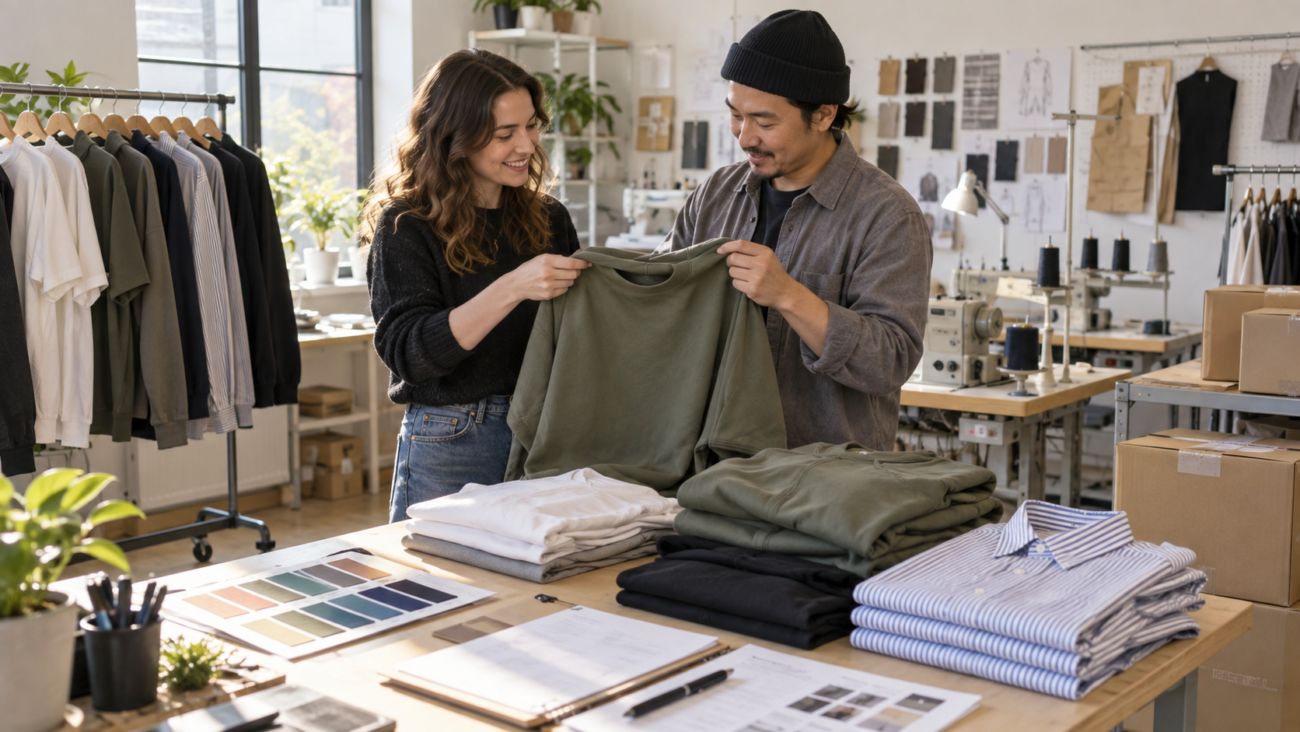
- Design review: confirm the category, customer, measurements, fabric, colors and branding.
Feasibility and quotation: review pattern, construction, quantity, sample cost, MOQ and production timing.
Sample development: cut and sew the first sample for fit, appearance and workmanship review.
Sample revision: record measurable changes and approve the final specifications.
Bulk preparation: confirm fabrics, trims, labels, packaging and inspection standards.
Production and shipment: coordinate cutting, sewing, finishing, quality checks, packing and export delivery.
For a broader view of yarn sourcing, sampling. grading. private label details and production planning, see our custom knitwear manufacturing service
MOQ and Cost Factors for Cut-and-Sew Apparel
Pricing depends on garment category, fabric, pattern complexity, sizes, colors, decoration, trims, labels, packaging, quantity and delivery requirements. We recommend a practical production plan after reviewing your collection.
The unit price is mainly influenced by:
- Garment category and construction: pattern complexity, sewing operations and finishing requirements.
Fabric composition, weight and color count: these affect material cost, yield and production efficiency.
Decoration and branding: prints, embroidery, patches, labels and special trims require artwork review and setup.
Size range and grading: wider size coverage increases sampling and cutting work.
Packaging and compliance: custom bags, cartons, barcodes and target-market labels add preparation time.
Order quantity and schedule: quantity, color split and delivery timing influence unit cost.
A low advertised MOQ does not always mean a low-cost fist order Yam minimums custom colors, trim setup and sample revisions can make a smllrun
expensive. The most efficent first order usualy limits unecessay colorways and uses a dearly defined size ratio while preserving the design details that
matter to the customer.
Cut-and-Sew Quality Control Points
We compare bulk garments with the approved pattern, measurements, fabric, color, construction, decoration, labels and packaging. Checks cover cutting accuracy, seam quality, fit, closures, finishing, folding and carton marks before shipment.
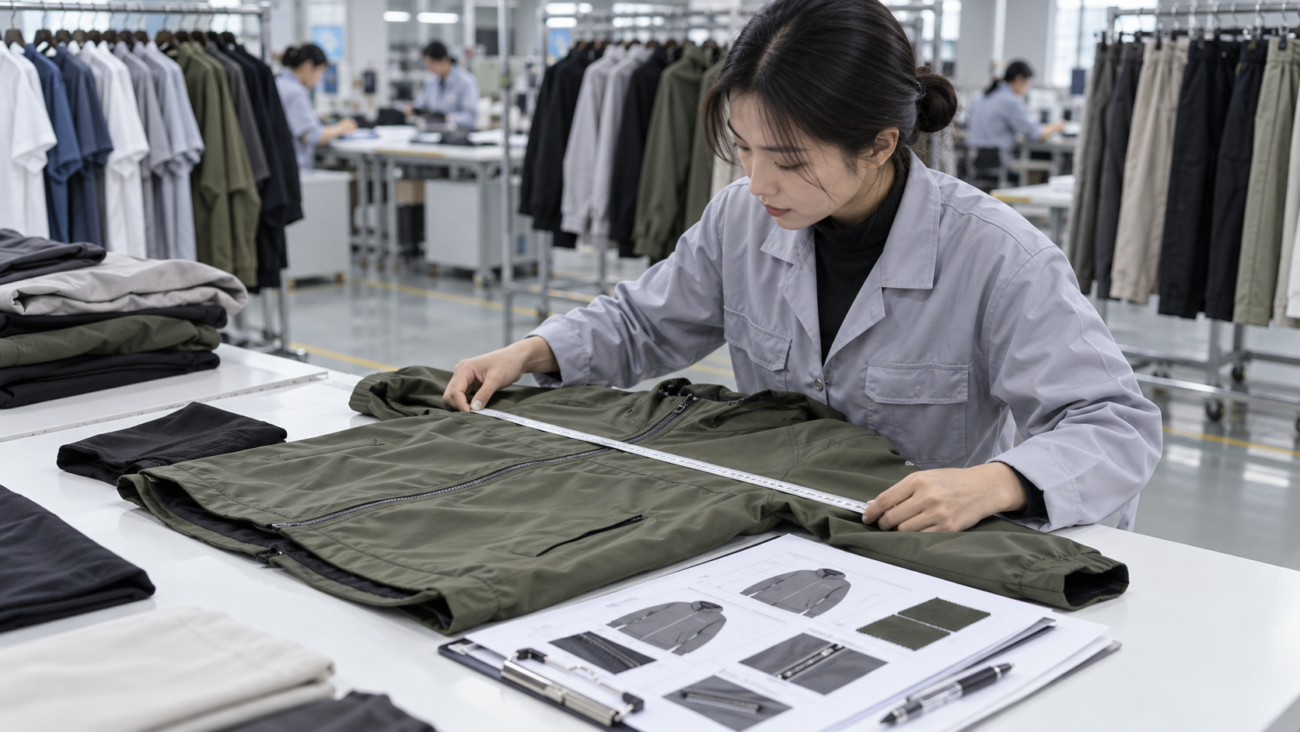
For cut-and-sew production, compare each approved sample with the final pattern, measurements, fabric, color, construction, decoration, labels and packaging. Check cutting accuracy, seam quality, fit, closures, finishing and dimensional stability before bulk shipment.
- Pattern measurements, cutting accuracy, seam quality and stitch consistency.
Fabric weight, color, shrinkage, pilling and recovery.
Prints, embroidery, patches and other decoration placement.
Collars, cuffs, hems, pockets, closures and reinforcement.
Labels, hangtags, packaging, carton marks and final packing.
Our apparel quality control process covers development samples, patterns, measurements, fabric and trim approval, workmanship, decoration, labeling, packing and final shipment checks across the collection.
Labels, Packaging and Compliance
Your collection can include neck labels, care labels, size labels, hangtags, barcode stickers, branded bags, cartons and buyer-specific packaging. Confirm artwork, dimensions and target-market requirements before bulk production.
What to Send for a Cut-and-Sew Quote
Send your Tech Pack, pattern, sketch, product photos or reference sample; target category and fit; fabric and color references; size chart; artwork; quantity by style and color; labels and packaging; target market and delivery date.
- Product category, pattern or Tech Pack, reference photos or sample.
Target fabric composition, weight, stretch, hand feel and care requirements.
Color references, size chart, grading rules and order size range.
Artwork for prints, embroidery, patches, labels, hangtags and packaging.
Expected quantity, color split, target market, compliance needs and delivery date.
A complete Tech Pack is useful, but it is not the only way to begin. We can review a reference sample, sketch or clear images and identify which details still need to become measurements and production specifications.
Frequently Asked Questions
What is the MOQ for cut-and-sew apparel?
MOQ depends on garment category, fabric, construction, color count, size range and decoration. Share your collection plan and target quantity so we can recommend a practical first order.
Our usual MOQ is 100 pieces per style. The final color and size split depends on yarn availability custom dyeing, trim minimums, artwork and design
complexity.
Can you develop garments from a photo or sample?
Yes. We can review product photos, a physical sample, sketch, pattern or Tech Pack. We confirm measurements, fabric, construction, branding and finishing details before sampling.
How long do sampling and production take?
Sampling commonly takes about 7–10 days after the specifications are confirmed. Bulk timing depends on fabric availability, quantity, colors, decoration, packaging and the production schedule.
Can you produce a complete cut-and-sew collection?
Yes. HUYU Apparel coordinates T-shirts, shirts, hoodies, jackets, trousers, skirts, dresses, uniforms and capsule styles across knit and woven fabrics.
How do I choose the right fabric and construction?
The best choice depends on season, silhouette, target customer, selling channel and price point. We compare fabric weight, stretch, hand feel, recovery, shrinkage and care requirements before approval.
Can you add private labels and custom packaging?
Yes. Neck labels, care labels, size labels, hangtags, barcode stickers and custom packaging can be incuded. Please provide the label artwork dimensions and
target-market information before bulk production.
Start Your Cut-and-Sew Project
Send your pattern, Tech Pack, reference images, sample, size chart or product idea. HUYU Apparel will review the fabric, construction, measurements, MOQ, sample requirements and production schedule before development begins.
MOQ: flexible by category and program | Sample Time: about 7-10 days | Bulk Production: confirmed after approval | Scope: knit and woven apparel
Contact HUYU Apparel and send your cut-and-sew project.
References
- Federal Trade Commission, Threading Your Way Through the Labeling Requirements Under the Textile and Wool Acts.
- Federal Trade Commission, Clothes Captioning: Complying with the Care Labeling Rule.
- OEKO-TEX, OEKO-TEX STANDARD 100.
- Textile Exchange, Responsible Wool Standard
- .Textile Exchange, Recycled Claim Standard and Global Recycled Standard.
About HUYU Apparel
HUYU Apparel supports brands with practical pattern review, cut-and-sew development, sampling, production coordination, quality control and export-ready packing across knit and woven apparel.