
 Accessories
Custom Apparel Printing for Branded Collections
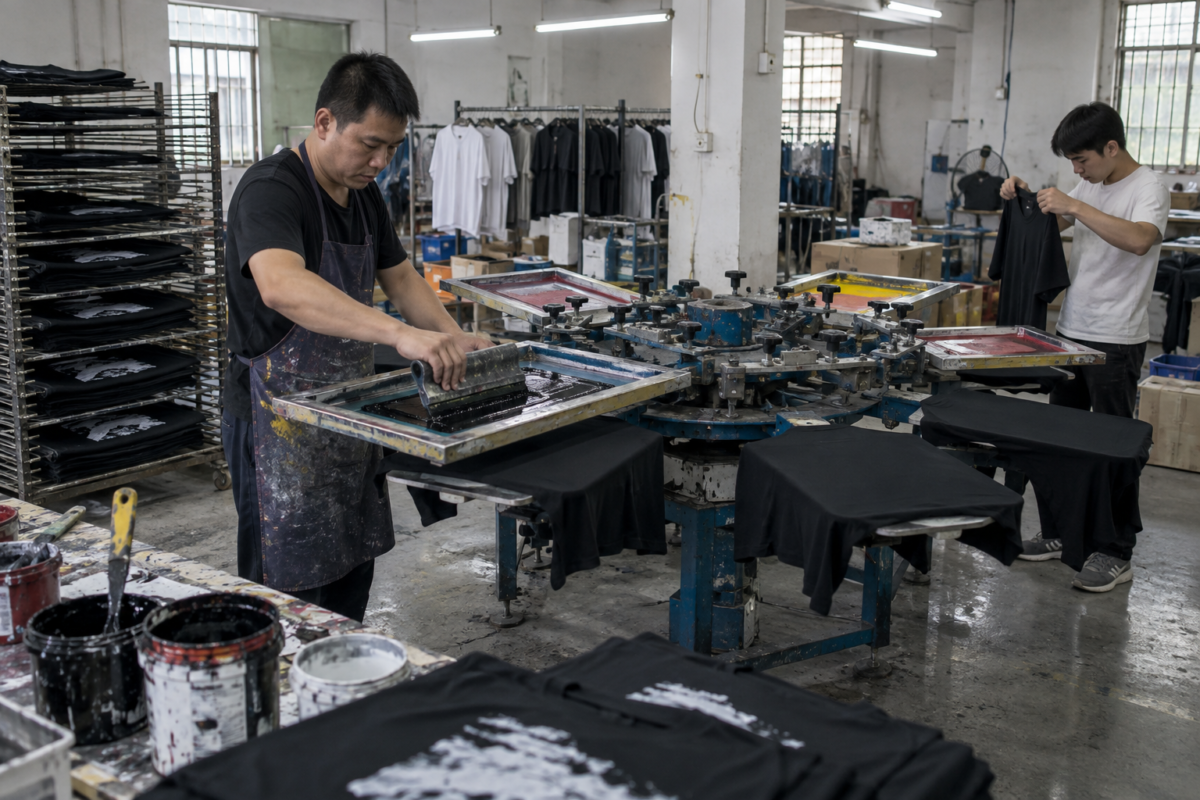
We help brands choose printing methods, artwork placement and production details for durable, consistent decoration. From screen printing and DTG to heat transfer, puff, discharge and specialty effects, we match the technique to the fabric, design and target quantity.
|
Production Item |
KnitSeek Capability |
|---|---|
|
Products |
Button-front, zip, open-front, cropped, longline, shaw-collar, varsity, hooded and coordinated cardigan styles |
|
Materials |
Cotton, wool, cashmere, acrylic, mohair, viscose, recycled fibers and blended yarns |
|
Gauge Range |
3GG-18GG |
|
Services |
OEM, ODM, private label, sampling, yarn sourcing, size grading, labels and packaging |
|
MOQ |
100 pieces per style |
|
Sample Time |
7-10 days |
|
Bulk Production |
25-45 days, depending on yarn availability, quantity, color count, design complexity and production schedule |
Printing Techniques We Support
Printing can be developed for T-shirts, hoodies, shirts, jackets, trousers, uniforms and promotional apparel, with artwork checked against fabric, color, size and placement requirements.
- Button-front cardigans: V-neck, crew-neck polo-collar, collarless and shaw-collar constructions with custom button size,spacing and material.
- ZIp cardigans: Ful-zip, two way zIp, quarter-zip and hooded options, with ZIpper lengh and tape stabilty checked aganst the knitted front edge.
- Open-tront cardigans: Clean-tront watertal, belted and longline styles that rey on controlled drape and front-edge recovery raher than buttons
- Cropped and bolero cardigans: Short proportions for fashion capsules, occasionwear and coordinated sets.
- Chunky cardigans: Heay cable, rb, oversized and textured designs, generally developed in lower gauges with greater garment weight.
- Fine-gauge cardigans: Lghtweight cashmere, wool cotton or viscose -blnd styles for premium layering. oficewear and trans-seasonal collections.
- Graphic and varsity cardigans: Jacquard, intarsia, embroidery, contrast trims, stripes, badges and custom artwork
For product references, buyers can revew a cable-knit wool cashmere cardigan and a women's open -front cashmere cardigan These are develpmentexamples rather than fixed stock styles; yarn, gauge, fit, color, trims and branding can be adjusted for your project.
Printing and Garment Construction Decisions
A cardigan sample often fais at the front opening before itfails anywhere else. One detail buyers frequenty overlok is that the placket cannot be specifed
independently from the body stich yarn stretch, button weight and washing method A soft body with an overly firm placket can pull upward a loose
placket can grow and create a wavy front.
|
Design Decision |
What Must Be Confirmed |
Typical Production Risk |
|---|---|---|
|
Front placket |
Width, stitch structure, density, attachment method and finished |
Waving, twisting, stretching or uneven front lengths |
|
Buttons and |
Button diameter, thickness, weight, spacing and buttonhole |
Buttonholes opening too wide, pulling or |
|
Zipper |
Zipper type, tape, length, shrinkage behavior and insertion |
Rippling, exposed tape or a front edge that does not |
|
Neckline or collar |
V depth, collar height, rib recovery and neckline shape |
Neckline spreading, collar collapse or asymmetric |
|
Pockets |
Position, opening width, reinforcement and weight |
Sagging, distortion or visible pulling on the body |
|
Hem and cuffs |
Rib tension, width, elastane use and finished recovery |
Flare, tightness or loss of shape after washing |
I you are stll converting a concept into production specifications the design your own knited sweater guide exp lans how to prepare artwork yam stich
measurement and Tech Pack information before sampling.
How to Select Print Method, Fabric and Artwork
Gauge affects the surface, welght drape,stich definition and production method. t should be selected together with yam coun and garmen dmensionsrather than treated as a quality grade. A higher gauge is not automatcaly beter, and a lower gauge is not automatcaly wamer the final result depends on
fiber, yarn construction, stitch density and garment weight.
- 3GG-5GG: Suitable for chunly cables oversized sllouettes, heary rbs and winter cardigans. These styles use more yarn and may require stronger
buttons, reinforced pockets and careful weight control. - 7GG-9GG: A practical mid weight range for wool blends, cotton, acyic and everyday cardigans. It supports visible texture without becoming excessively
bulky. - 12GG-14GG: Suitable for deaner, ighter cardigans, refined ribs and premium layering pieces. Placket stability and measurement control become more
visually noticeable because the surface is smoother. - 16GG-18GG: Used for fine- gauge, lightweight cardigans in suitable cashmere, wool, viscose or blended yarns. Yan quality, stitch density and finishing
need close control because small irregularities are easier to see.
Material selection should reflect the selling season and care expectations. Wool and cashmere provide warth and premium hand feel but require fiber-content accuracy, pilling assessment and appropriate care instructions. Cotton offers a dry, breathable handle but may become heay in long cardigansViscose improves drape but can need extra attention to growth and recovery. Acryic and blended yamns can support price control,color availability andeasier care, but the blend should be tested against the intended hand feel and pilling target.
Our Custom Printing Process
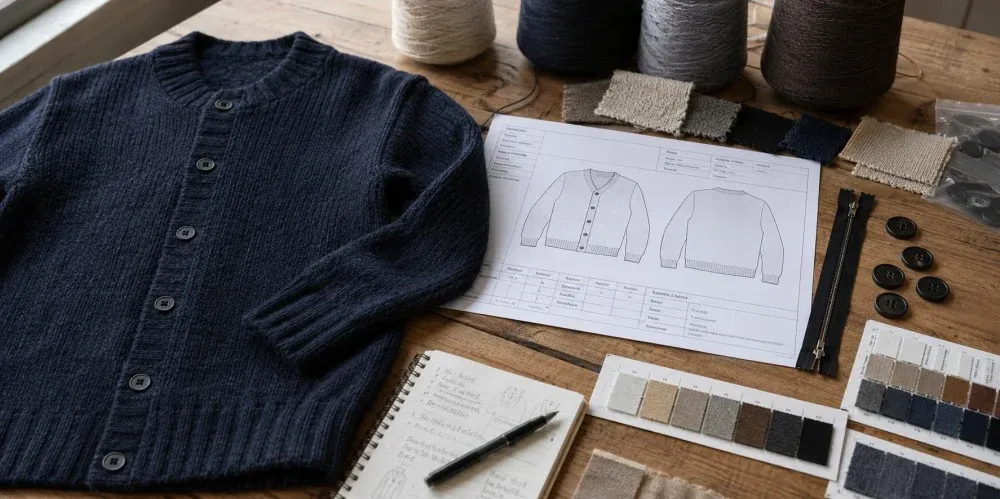
- Design review: Send a Tech Pack, sketch, reference garment or product images. We review the slhouette,measurements, yarn, gauge, stitch structure
placket, closure, pockets and branding details. - Feasibility and quotation: We confim suitable yarn options, color method, trim availability, MOQ, sample cost and estimated production schedule
Custom-dyed yarns, special buttons and complex artwork may affect both minimums and timing. - Sample development Sampling usually takes 7-10 days after te main develpment details are confimed. The fist sample is used to evaluate
appearance, hand feel, construction, measurements and fit. - Sample revislon Comments should identiy measurable changes, such as front length, V depth, button spacing, pocket position, body width or sleeve
shape. General comments such as "make it better" are difficult to reproduce consistently. - Bulk preparation Before bulk production, the yarn, color, measurements trims, labels, packaging and approved workmanship standard are confimed.
- Bulk production and inspection: Production normaly takes 25-45 days depending on yarm availability, quantity, color count design complexity and
production schedule. Finished cardigans are checked before packing and shipment.
For a broader view of yarn sourcing, sampling. grading. private label details and production planning, see our custom knitwear manufacturing service
Custom Printing Cost and MOQ Factors
Knitseek's usual MOQ is 100 pieces per style. The workable color and size split depends on the yam, avallable colors, trim minimums and design complexity.
A 100-piece order using stock yam and standard butons is different from a 100-piece order divided into several custom-dyed colors with unique trims.
The unit price is mainly influenced by:
- Yarn composition, yarn count, fiber grade and color method
- Garment weight and yarn consumption
- Gauge, stitch density and knitting time
- Cable, jacquard, intarsia, crochet, embroidery or special structures
- Button, zipper, pocket, belt and other trim requirements
- Size range and grading complexity
- Washing, brushing, special finishing or testing
- Labels, hangtags, barcodes and packaging
- Order quantity, color count and delivery schedule
A low advertised MOQ does not always mean a low-cost fist order Yam minimums custom colors, trim setup and sample revisions can make a smllrun
expensive. The most efficent first order usualy limits unecessay colorways and uses a dearly defined size ratio while preserving the design details that
matter to the customer.
Print and Garment Quality Control
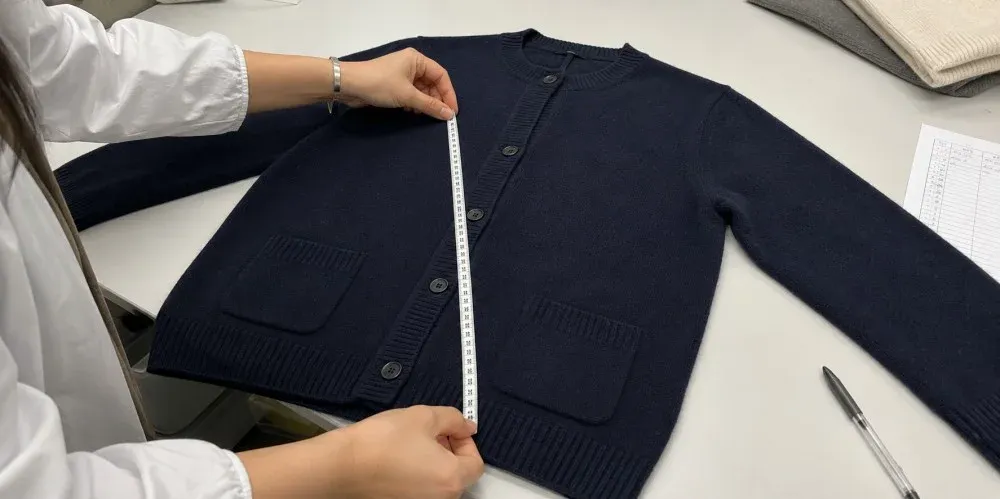
When reviewing a cardigan sample, the first checks should be the front balance and closure. Lay the garment flat without pulling it into shape. Both fronts
should finish at the same length, the placket should lie dleanly,and the neckine should meet symmetrically. Then close every button or zipper and check
whether the body twists or the front edge buckles.
- Placket width, density, straightness and left-to-right length balance
- Button size, spacing, attachment security and replacement-button requirement
- Buttonhole size, reinforcement, stretch and recovery
- Zipper length, tape exposure, smooth operation and front-edge rippling
- Neckline shape, collar roll, shoulder balance and armhole appearance
- Pocket position, opening size, reinforcement and sagging
- Chest, body length, sleeve length, cuff and hem measurements
- Garment weight, hand feel, pilling tendency, color consistency and shrinkage
- Linking, seam cleanliness, loose yarns, finishing and pressing
- Linking, seam cleanliness, loose yarns, finishing and pressing
Our knitwear quality control process explains how material, measurements, workmanship and final packing are checked across development and buik
production.
Private Label, Packaging and Compliance
Private labe cardigan production can incude neck labels, care labes, size labels hangtags, barcode stickers, branded poybags tissue, cartons and other
buyer-specifed packaging. These details should be confirmed during sampling because label dimensions and placement can affect the garment finish.
For products sold in the United States, most textile and wool garments requre acurate fiber content county of origin information and the identity of the
manufacturer or responsible marketer, Appare also requires approprate care instructions. Buyers should prepare target-market label requirements before
bulk production rather than treating labels as a final packing decision.
Knitseek can discuss BSC, WRAP, OEKO-TEX. RWS and GRS-related requirements according to the factory, yam, material and order scope. These references
are not automatic daims for every cardigan or every yam. The relevant certificate, transaction documentation or test requirement should be checked for the
specific order before it is used in product marketing.
What to Send for Custom Printing
- Tech Pack, sketch, product photos or reference sample
- Target yarn composition, hand feel and garment weight
- Preferred gauge or visual reference
- Color standards or Pantone references
- Size chart, grading rules and order size range
- Front placket, button, zipper, pocket and collar details
- Artwork for jacquard, intarsia, embroidery or other decoration
- Order quantity, color split and size ratio
- Target market and compliance requirements
- Label, hangtag, barcode and packaging specifications
- Requested delivery date and shipping destination
A complete Tech Pack is useful, but it is not the only way to begin. We can review a reference sample or dear images and identiy which detail stil need to
be converted into measurements and production specifications.
Frequently Asked Questions
What is the MOQ for custom cardigans?
Our usual MOQ is 100 pieces per style. The final color and size split depends on yarn availability custom dyeing, trim minimums, artwork and design
complexity.
Can you make a cardigan from a photo or physical sample?
Yes We can review a product photo, physical sample, sketch or Tech Pack A photo can show the appearance, but measurements, yarn, gauge, garment
weight, closure details and construction stillneed to be confirmed before sampling.
How long does cardigan sampling and bulk production take?
Sample time is usually 7-10 days. Bulk production is normaly 25-45 days, depending on yarn availability, quantity, color count design complexity and the
production schedule.
Can you make button, zipper and open-front cardigans?
Yes. We can develop buton-font, full-zip, two -Way zip, open-front, belted and other cardigan constructions. The placket or front edge must be matched to
the yarn, stitch and garment weight.
Which yarn and gauge should I choose?
The choice depends on season, slhouette, target price, hand fel and care requirements. Chunky styles commonly use lower gauges, while lightweight
premium cardigans commonly use finer gauges. We can recommend options after reviewing the design.
Can you add private labels and custom packaging?
Yes. Neck labels, care labels, size labels, hangtags, barcode stickers and custom packaging can be incuded. Please provide the label artwork dimensions and
target-market information before bulk production.
Start Your Custom Printing Project
Send your Tech Pack reference images, sample, size chart or product idea. Knitseek wil review the yarn, gauge, placket closure, measurements, MOQ
sample requirements and production schedule before development begins.
MOQ: 100 pieces per style | Sample Time: 7-10 days | Bulk Production: 25-45 days | Gauge: 3GG-18GG
Contact KnitSeek and send your cardigan project.
References
- Federal Trade Commission, Threading Your Way Through the Labeling Requirements Under the Textile and Wool Acts.
- Federal Trade Commission, Clothes Captioning: Complying with the Care Labeling Rule.
- OEKO-TEX, OEKO-TEX STANDARD 100.
- Textile Exchange, Responsible Wool Standard
- .Textile Exchange, Recycled Claim Standard and Global Recycled Standard.
About the Author
Wen has more than 20 years of practical experience in knitwear development production management and garment quality control.